
Most people spend time washing the outside of their car but never think about what’s under the hood. Here’s why that’s a mistake:
Performance and fuel economy: Grease, oil, and grime act like a thick blanket over your engine. They trap heat that the engine needs to release to run efficiently. A dirty engine runs hotter, works harder, and burns more fuel. According to carwash.com, a clean engine directly improves fuel economy by reducing the insulating layer that causes excess heat buildup.
Fire prevention: This one surprises people. Leaves, paper debris, and built-up oil deposits are all flammable. A single electrical spark or hot exhaust component near a grease-soaked surface is all it takes. Cleaning your engine bay removes that fire risk entirely.
Leak detection: A clean engine tells you things a dirty one hides. Coolant leaks, oil seeps, and cracked hoses are invisible under a layer of grime. Cleaning first makes every drip visible.
Cable and pulley longevity: Grease and grit eat away at belt surfaces and work into rubber seals. A clean engine bay means less wear on cables, pulleys, and gaskets over time.
Resale value: Buyers open hoods during inspections. A clean, well-maintained engine bay signals the whole car has been cared for — a clean bay is worth real money when you sell.
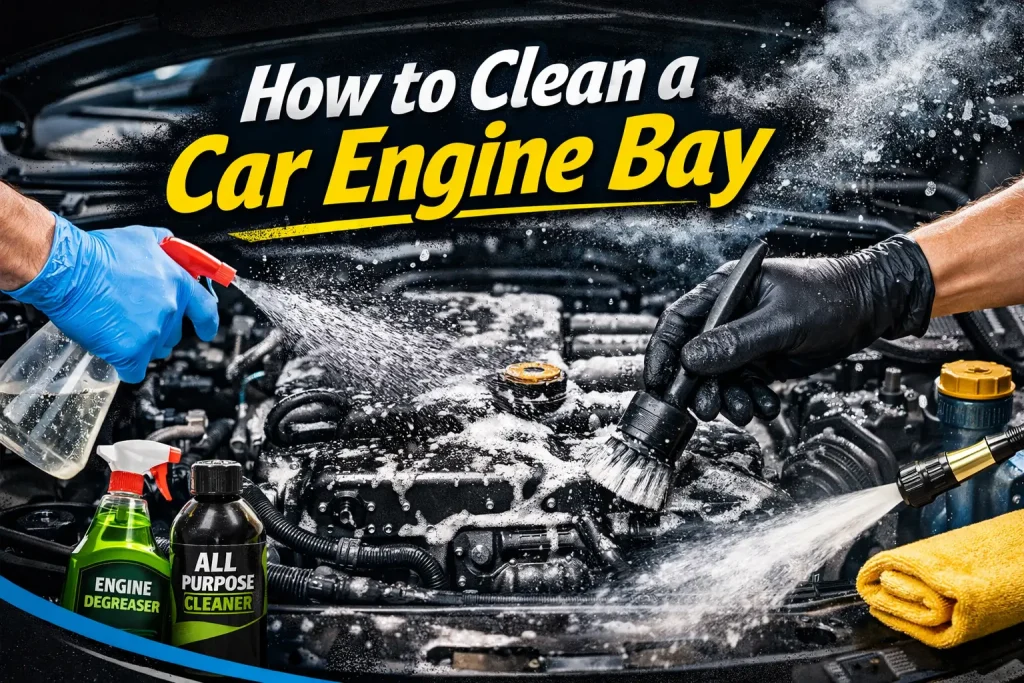
Quick Answer: Let the engine cool until it is just warm to the touch — not cold, not hot. Cover electrical components, apply degreaser bottom-up, scrub, rinse gently with a garden hose, dry the spark plug wells first, then run the engine for 10–15 minutes. This guide covers the wet wash and the waterless method — so you pick the right one for your car.
3 Things to Check Before You Start
Skip these and you may end up cleaning over a bigger problem.
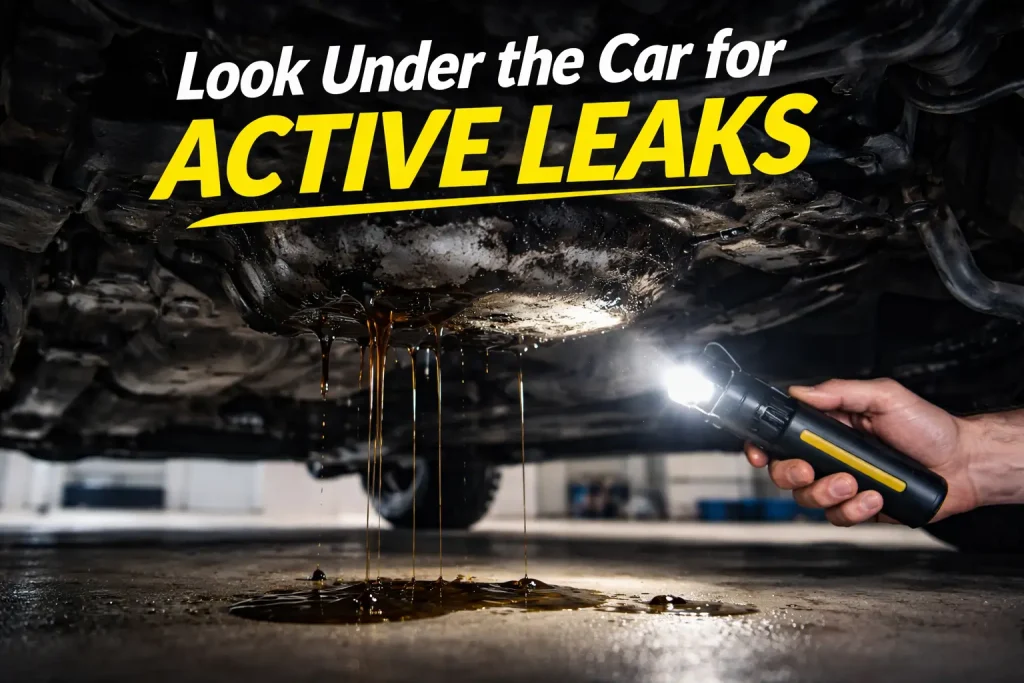
1. Look under the car for active leaks. Check for fresh puddles of oil, coolant, or transmission fluid before you start. Cleaning hides leak evidence. If you find a puddle, identify the source and fix it first — then clean.
2. Check your local and state laws. Some cities and counties restrict how engine cleaning runoff can be disposed of. Water mixed with motor oil and degreaser is classified as a pollutant. A self-serve car wash is the legally safest option — they’re required by law to capture and filter that water before it reaches the drain.
3. Check your owner’s manual. Turbocharged engines, hybrid systems, and some newer vehicles have specific cleaning cautions. Diesel engines may have exposed sensors that need extra protection. Two minutes of reading can prevent a costly mistake.
What You Need
Essentials (you may already own most of these):
- Engine degreaser — see the comparison table below
- Garden hose with an adjustable nozzle (set to “stream” — never “jet” or “power”)
- Stiff-bristle brush and a small toothbrush
- 3–4 microfiber towels
- Plastic bags and masking tape
- Safety gloves and eye protection
Worth getting:
- Compressed air can or leaf blower — the best drying tool for electrical connectors
- Boar’s hair detailing brush — safe near sensors and plastic trim
- Engine trim protectant — 303 Aerospace Protectant or Chemical Guys Black on Black
- Foam applicator pad — for applying degreaser near electronics without overspray
Top 5 Engine Degreasers Compared
One of the most common questions is: which degreaser should I actually buy?
| Product | Type | Best For | Strength | Safe on Rubber? | Price Range |
|---|---|---|---|---|---|
| Simple Green Heavy Duty | Water-based/citrus | Most everyday cars | Medium | Yes | $10–15 |
| Purple Power | Water-based | Moderate buildup, budget pick | Medium-High | Yes | $8–12 |
| Meguiar’s Super Degreaser | Water-based concentrate | All-around daily drivers | Medium | Yes | $14–18 |
| CRC Engine Degreaser | Solvent-based | Severely neglected engines | High | Use with caution | $8–12 |
| Chemical Guys Signature Series | Citrus-based | Performance and show cars | Medium | Yes | $16–22 |
Our recommendation for most people: Simple Green Heavy Duty or Purple Power. They’re affordable, water-based (safe on rubber seals), widely available, and powerful enough for any engine that’s been cleaned in the last few years.
When to use a solvent-based product: Only if the engine hasn’t been cleaned in 5+ years and has thick, caked-on deposits. Use it once to break through the worst of it, then switch to water-based for regular maintenance.
⚠️ Important: Even “biodegradable” or “eco-friendly” degreasers become hazardous waste once they dissolve motor oil and engine chemicals. Never pour the runoff down a household drain or storm drain. Use a self-serve car wash bay or dispose of the water according to your local regulations.
Wet Wash vs Waterless: Which Method Fits Your Car?
Before you touch anything, decide which method is right for your specific vehicle.
| Wet Wash | Waterless | |
|---|---|---|
| Best for | 1996 and newer vehicles | Pre-1995 classics, exotics, collector cars |
| Water used | Yes — low-pressure garden hose | None |
| Total time | 60–90 minutes | 45–75 minutes |
| Cleaning depth | Deep clean with degreaser penetration | Surface and cosmetic clean |
| Risk level | Low (with proper prep) | Very low |
| Who uses it | DIY home cleaners | Professional detailers on high-value cars |
Why older cars need the waterless method: Pre-1995 vehicles have unsealed wiring, exposed connector ports, and distributor caps that were not designed with water exposure in mind. Even a careful wet wash can cause shorts, misfires, or corrosion months later on these vehicles. If you have a classic car, a vintage vehicle, or a high-value exotic, always go waterless.
Step-by-Step: Wet Wash Your Engine Bay
Step 1 — Let the Engine Cool to “Warm, Not Hot” 🌡️
This is the most misunderstood step in engine cleaning.
Here’s the truth: you don’t want a cold engine, and you definitely don’t want a hot one.
- Too hot = thermal shock risk. Spraying cool water on a very hot engine can cause rapid contraction of metal and plastic components, warping gaskets and cracking plastic covers. It can also burn you from steam.
- Too cold = degreaser underperforms. Cold grease is stiff and holds onto surfaces.
The sweet spot: Run the engine for 5–10 minutes, then turn it off and let it sit for 20–30 minutes. Touch the engine with the back of your hand — it should feel warm, not hot.
Step 2 — Protect Your Fenders 🔧
Degreaser overspray removes car wax off painted fenders. It takes 60 seconds to prevent this.
- Lay a microfiber towel over both fender edges, or tape them off with masking tape
- If you do get overspray on the fenders, rinse them with water immediately — before it dries
Step 3 — Disconnect the Negative Battery Terminal
- Locate the black cable (negative terminal, marked with a minus sign “−”)
- Remove it and set it aside so it can’t accidentally touch the terminal
This eliminates electrical short risk while water and wet cloths are near wiring.
Step 4 — Cover Every Sensitive Component
This step decides whether the cleaning job goes well or costs you money. Don’t rush it.
Cover these with plastic bags sealed tightly with masking tape:
- Alternator — rectangular component, usually bolted to the side of the engine
- Fuse box — typically under a plastic lid near the firewall; tape it shut completely
- Ignition coils and wiring connectors — each plug-in connector gets its own bag
- Mass Air Flow (MAF) sensor — this sensor measures the air entering the engine. Degreaser on the MAF sensor’s delicate wire filament destroys it. The replacement cost is $100–400. Always cover it and never spray degreaser directly near it.
- Air intake and air filter housing — water in the air intake is directly drawn into the engine
- Spark plug openings — water pooling here causes misfires and ignition coil damage
- Any exposed breather tubes — small rubber tubes connecting the air intake to the valve cover
Step 5 — Dry Brush All Loose Debris
Before any liquid goes near the engine:
- Use your stiff brush to knock loose dirt, leaves, and grit from the top of the engine and corners
- Clean along the base of the windshield and near the firewall — debris packs in there
- Remove any obvious chunks by hand
This prevents loose dirt turning into muddy paste when degreaser is applied.
Step 6 — Apply Degreaser Bottom-Up
- Start at the bottom of the engine and work upward — degreaser runs down, so starting at the bottom means the top gets a natural second coat
- On tight areas near electronics, use a foam applicator instead of direct spray
- Focus extra product on the valve cover, oil pan, hose junctions, and the firewall
- For a moderately dirty engine: let it sit 5–7 minutes
- For a heavily neglected engine: spray the night before, let it soak overnight, then scrub and rinse the following day
Step 7 — Scrub Every Surface
- Flat surfaces: circular scrubbing motions with the stiff-bristle brush
- Tight spaces: switch to the toothbrush for bolt heads, hose clamps, and between components
- Plastic covers and sensors: use only the soft boar’s hair brush — stiff bristles will scratch
- What you should see: brown and black grime lifting off surfaces — that’s the degreaser working
Step 8 — Rinse Carefully, Top to Bottom
This is the step people fear the most. Just follow these rules and it goes fine:
- Garden hose on the lowest flow setting or “stream” position — no pressure washers, not even on low
- Rinse from top to bottom so dirty water flows down and out — not up into electrical components
- Keep the water stream moving — don’t hold it in one place near covered components
- Rinse the fenders and grille immediately if you got any degreaser on them
- Total rinse time: 2–3 minutes
🚫 Pressure washers — even at the lowest setting — force water past component seals and into connectors, alternators, and the air intake. The result is a short, a damaged alternator, or a hydrolocked engine. The savings in cleaning time aren’t worth a $300–700 repair bill.
Step 9 — Check and Dry the Spark Plug Wells First
Before anything else during drying:
- Remove the plastic bags from the plug wells
- Inspect each well for water using a flashlight
- Blow out any water with compressed air before proceeding
- Reconnecting the battery with water in the wells = immediate misfire
Step 10 — Dry Everything Completely
- Microfiber towels for all surfaces you can reach
- Compressed air or a leaf blower for connectors, tight spots, and wiring looms
- Let the engine bay air out for 10–15 minutes with the hood propped open
Step 11 — Reconnect and Run the Engine
- Reattach the negative battery terminal
- Start the engine and let it run with the hood open for 10–15 minutes
- The engine heat evaporates residual moisture from surfaces and inside connectors
- Light steam rising off the engine = completely normal
- Burning smell + smoke = shut off immediately and investigate
Step 12 — Apply Engine Trim Protectant
Once the engine is slightly cooled down:
- Apply 303 Aerospace Protectant or Chemical Guys Black on Black to all plastic covers and rubber hoses
- Use a foam applicator or microfiber cloth — not a spray directly onto the engine
- Buff with a clean dry cloth to remove excess
- This protects rubber from heat cracking and UV damage, and prevents that dusty-gray look
- Never apply any protectant near belts, fans, or pulleys — it makes surfaces slippery
Step-by-Step: Waterless Engine Bay Cleaning
Use this method for pre-1995 vehicles, classic cars, exotic cars, or any car where you can’t risk water exposure to the electrical system.
What you need: Degreaser, 5–6 microfiber towels, a detailing brush set, trim protectant
- Let the engine cool completely — no warm engine trick here. You are working dry.
- Dry brush all loose debris from the entire engine compartment.
- Spray degreaser onto a microfiber towel — never spray directly onto the engine.
- Wipe each section by hand, folding to a clean face of the towel as sections get dirty.
- Use a detailing brush for tight areas — apply degreaser to the brush bristles, scrub gently, wipe clean with a towel.
- No rinsing — the microfiber lifts the grease off with the degreaser.
- Apply trim protectant to all plastic and rubber surfaces as the final step.
This method takes longer per square inch but gives you total control over where product goes. Professional detailers use this on every vehicle worth over $30,000 for a reason.
Never Use These on Your Engine
These are common household products that people try on engines — with expensive results.
| Product | Why It’s Dangerous |
|---|---|
| Vinegar | The acetic acid makes metal susceptible to rust. Even diluted, it corrodes steel and aluminum engine parts over time. |
| Bleach | Sodium hypochlorite corrodes steel and aluminum and destroys rubber seals and gaskets. Permanent damage, often invisible until something fails. |
| WD-40 | WD-40 is a lubricant and rust preventer, not a degreaser. It leaves an oily film that attracts dust, and it degrades rubber components over time. |
| Dish soap | Not strong enough for engine grease. Leaves a detergent residue on rubber that attracts dust and dries out hose surfaces. |
| Pressure washer | Forces water into sealed connectors, alternators, and spark plug wells at pressures they were never designed for. Even “low pressure” settings damage engine components. |
| Carburetor cleaner | Too aggressive for a general engine clean. It strips protective coatings off plastic covers and damages rubber on contact. |
9 Costly Mistakes to Avoid
These come directly from repair shop experience:
- Cleaning a fully cold engine — Cold grease is stiff and fights the degreaser. Always clean warm, not hot.
- Using a pressure washer — One shot into an alternator or MAF sensor = $100–700 repair.
- Skipping fender protection — Degreaser overspray strips car wax. Cover the fender edges before you spray anything.
- Not covering the fuse box fully — A single drop of water can cause a short circuit or blown fuse. Seal it completely.
- Spraying degreaser near the MAF sensor — The delicate wire filament inside is destroyed on contact. Cover it and never spray directly near it.
- Forgetting the spark plug wells — Water in the wells causes an immediate misfire the moment you turn the key. Check them every time.
- Letting the engine air dry without running it — Moisture in connectors causes corrosion weeks later. Always run the engine after cleaning.
- Using vinegar or bleach — Both cause long-term corrosion that isn’t visible until a seal fails or a component rusts through.
- Pouring runoff down the drain — Even biodegradable degreasers mixed with motor oil are legally classified as hazardous waste. Use a car wash bay or check local disposal rules.
DIY vs Professional: Cost Comparison
Is it worth doing yourself? The math is straightforward.
| DIY Cleaning | Professional Detail Service | |
|---|---|---|
| Cost | $15–40 in supplies | $80–200+ depending on engine size |
| Supplies last | 3–5 cleans | Single use |
| Time | 60–90 minutes | Drop-off and wait |
| Result | Very good maintenance clean | Show-car level finish |
| Best for | Regular annual maintenance | Pre-sale detailing, first-time deep clean |
| V6/V8 cost difference | None | V8 often costs $30–50 more |
The math: $25 in supplies lasts you three years of annual cleaning. A single professional service at $100–150 costs the same as four years of DIY.
That said, if you’re preparing to sell, or the engine hasn’t been touched in 5+ years, one professional detail service is worth the money as a reset — then you can maintain it yourself from there.
How Often Should You Clean Your Engine Bay?
| Driving Condition | Recommended Frequency |
|---|---|
| Urban/paved roads, light debris | Twice a year |
| Normal suburban and highway driving | Once a year |
| Rural roads with dust and grit | Every 3 months |
| Cold climate with road salt exposure | Once after winter ends — salt corrodes fast when it sits |
| Off-road or unpaved roads | Every 3 months |
| Track or performance driving | Every 3–4 months |
| After any oil or coolant leak repair | Immediately after the repair |
| Before selling the vehicle | 1–2 weeks before listing |
According to carwash.com, urban drivers on paved roads do well with twice-yearly cleaning, while those driving country or off-road routes should clean every three months to prevent debris buildup from becoming a long-term problem.
Should the engine be warm, cold, or hot before cleaning?
Warm — not hot, not cold. Run the engine for 5–10 minutes, then let it cool for 20–30 minutes until it is warm to the touch. A hot engine causes thermal shock when cool water hits it — this can crack plastic covers and warp metal. A cold engine means the degreaser has to fight stiff, cold grease. Warm is the sweet spot.
Can I use a pressure washer to clean my engine bay?
No — not even on low settings. Pressure washers force water past the seals of connectors, into the alternator, and into spark plug wells. The resulting damage — shorts, failed connectors, hydrolocked sensors — costs $100–700 to fix. A garden hose on the lowest flow setting does the job with zero risk.
What is the difference between cleaning an engine and cleaning an engine bay?
The engine bay is the entire compartment under the hood — including the firewall, fender aprons, battery tray, and all the components mounted around the engine block. Cleaning the engine means cleaning the block, cover, and visible components. For a complete job, you clean the entire engine bay.
Can I use WD-40 to clean my engine bay?
No. WD-40 is a water-displacing lubricant and rust preventer, not a degreaser. Applying it to an engine bay leaves an oily residue that attracts dust and grit, and it degrades rubber components over time. Use a purpose-made engine degreaser.
Can I use vinegar or bleach on my engine?
Never use either. Vinegar contains acetic acid that makes metal susceptible to rust. Bleach contains sodium hypochlorite which corrodes steel and aluminum and permanently degrades rubber seals. Both cause damage that isn’t visible immediately — it shows up months later when a seal fails.
What happens if water gets in the spark plug wells?
Water in the spark plug wells causes an immediate engine misfire when you start the car. It can also cause corrosion inside the ignition coil boots and on the plug electrodes. Always inspect and dry the wells with compressed air before reconnecting the battery.
Is it safe to clean a turbocharged engine?
Yes, but with extra precautions. Turbocharged engines have heat-sensitive boost hoses, intercooler pipes, and turbo housings. Let the engine cool longer — 45–60 minutes after driving — before cleaning. Avoid spraying degreaser directly on the turbo housing and boost pipes. Use the waterless method near the turbo itself.
How much does professional engine bay detailing cost?
Professional engine bay cleaning ranges from $80 to $200+ depending on engine size, depth of buildup, and whether the service includes extras like rust treatment or trim restoration. A standard engine detail at a detailing shop runs around $100–150 for most passenger cars. V8 engines and trucks typically cost more due to greater surface area.
Final Word
Cleaning your engine bay is one of the most overlooked — and highest-return — things you can do for your car.
It costs $25 in supplies and 90 minutes of your time. It keeps your engine running cooler, helps your fuel economy, protects belts and seals from grime damage, lets you spot leaks early, and adds real value when you sell.
Here’s your action plan — start this weekend:
- 🛒 Buy: Grab a citrus or water-based engine degreaser, a pack of microfiber towels, and some plastic bags. Total spend: ~$20–30.
- 📅 Pick a day: Choose a warm, dry day — cold and wet weather makes drying harder.
- 🔧 Follow the method: Wet wash for 1996+ cars. Waterless for classics, exotics, and anything pre-1995.
- 🛡️ Protect after: Apply 303 Aerospace or Chemical Guys Black on Black to all plastic and rubber surfaces when done.
- 📸 Take a before photo — the difference will genuinely surprise you.









Leave a Reply