
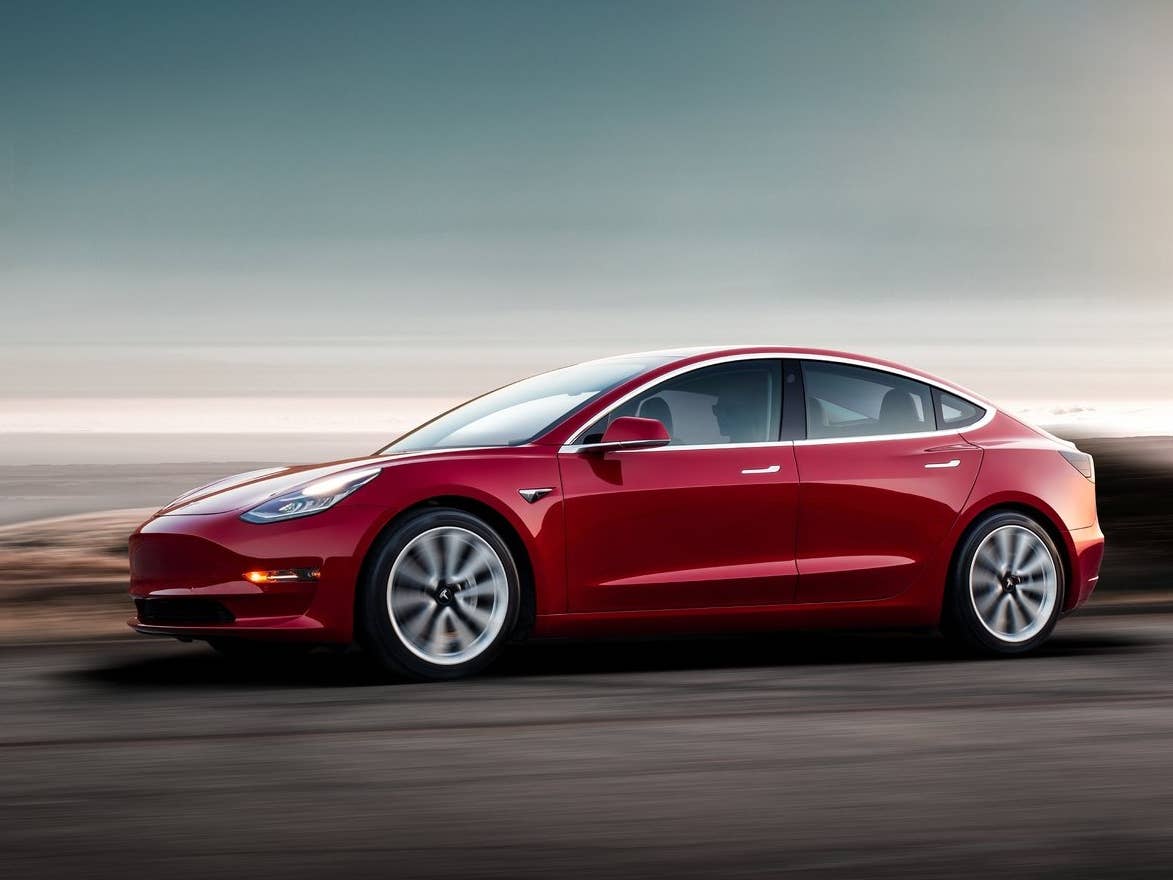
A wrongful death lawsuit has been filed against Tesla after a 2021 Model 3 crashed into a tree and caught fire in Thomas County, Georgia, killing a father and his 14-year-old son. The lawsuit was filed on April 3, 2026, in the U.S. District Court for the Northern District of Georgia by the boy’s mother, Shantorria Herring.
What Happened on December 23, 2024
Magarret Brion Smith, 35, was driving his son Karter Breon Smith, 14, from Tallahassee, Florida, to Atlanta on December 23, 2024. While heading north on Highway 35 in Thomas County, Georgia, the Model 3 left the left side of the road. It traveled into a pecan orchard and struck a tree. The vehicle caught fire almost immediately after impact.
Both the father and son were trapped inside. The lawsuit alleges the electric door handles stopped working after the battery system caught fire. Rescuers could not open the doors from outside. Both occupants died in the fire. Knowing what to do after a car accident is critical, but in this case, the lawsuit claims the vehicle’s design made escape impossible.
Lawsuit Alleges Multiple Tesla Model 3 Defects
The lawsuit targets several systems in the 2021 Model 3. It claims the car’s Full Self-Driving and Autopilot features were engaged at the time of the crash and either malfunctioned or were defective. The complaint states the vehicle failed to maintain its lane, failed to detect the lane departure, did not steer back to safety, missed the tree in its path, and did not trigger emergency braking.
The suit also points to data from the car’s Event Data Recorder. It shows the accelerator pedal jumped from 0.0 percent to 100 percent while the car was traveling at 63 miles per hour. There was no matching speed change or recorded brake input. The lawsuit argues this proves the system malfunctioned. Understanding how vehicle accident lawsuits work is important for anyone involved in a crash with advanced driver-assistance systems.
Electric Door Handles Trapped Occupants Inside
One of the most serious claims in the lawsuit is about the Model 3’s electric door handles. Tesla’s design uses handles that sit flush with the body and pop out electronically. The complaint alleges these handles became completely inoperable once the battery system caught fire. Without a mechanical backup, neither the occupants nor first responders could open the doors.
This is not the first time Tesla’s door handle design has faced criticism. China has already banned Tesla’s electric door handles over safety concerns. Members of U.S. Congress have also discussed potential regulations. The electric vehicle industry faces growing scrutiny over safety features that depend entirely on battery power to function.
Battery Fire and Thermal Runaway Claims
The lawsuit also targets Tesla’s lithium-ion battery pack. It claims Tesla knew the batteries were vulnerable to thermal runaway after a collision but did not design them to be reasonably crashworthy. Thermal runaway is a chain reaction in lithium-ion cells that causes rapid and intense heat. Once started, it is extremely difficult to stop and can produce fires that burn far hotter than gasoline fires.
The lawsuit seeks special damages for burial expenses and mental anguish. It also references public statements by Tesla CEO Elon Musk, who has claimed that Full Self-Driving is “probably better” than human drivers. The suit argues these claims are misleading. The broader history of electric vehicles shows the technology has come far, but safety concerns around battery fires remain a key challenge.
What Tesla Owners Should Know
Tesla has not publicly responded to this specific lawsuit. However, the case adds to a growing number of legal challenges over FSD safety, battery fires, and door handle design. Owners should familiarize themselves with the manual door release in the Model 3, which exists as an emergency backup inside the cabin. Understanding your vehicle’s insurance requirements is also important, especially when using advanced driver-assistance features.
The case is being handled by attorneys at Seay/Felton LLC and Parks Law LLC. No trial date has been set. The lawsuit is pending in the Atlanta Division of the Northern District of Georgia.
Follow AutoGearAlert for the latest updates on Tesla safety, EV recalls, and automotive lawsuits.




Leave a Reply